UX/UI Principles, 195 Evidence-Based Design Principles
- Role
- Designer and developer
- Team
- Solo, research to production code
- Outcome
- Within ten months of a solo launch, with zero paid acquisition, the reference became a paid product with customers in 10 countries.

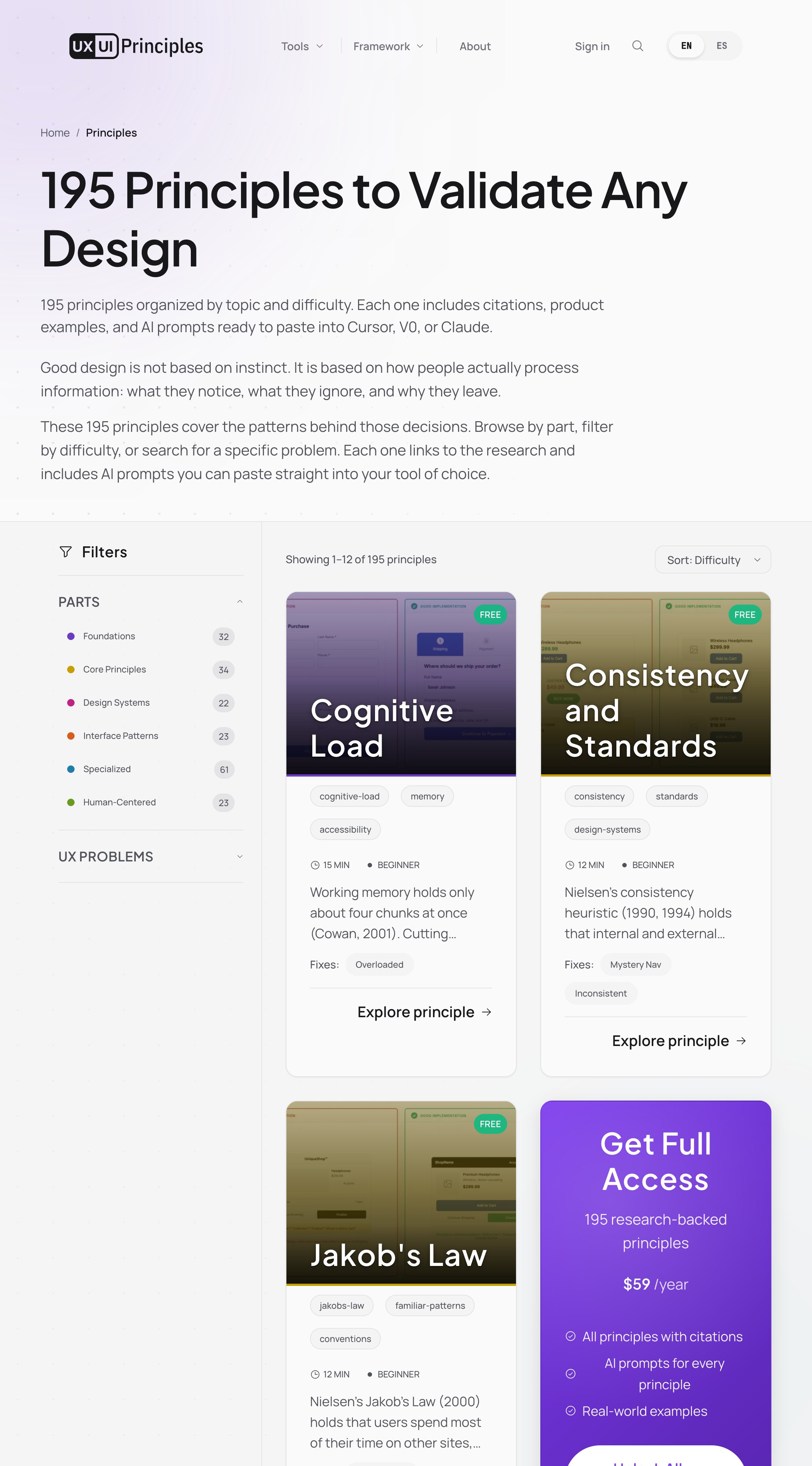
A solo-built reference of 195 evidence-based principles backed by 2,300+ citations. 256,000 Google search impressions from 219 countries and territories since launch, and a paid product with customers in 10 countries.
Sections
Context
Two decades of design reviews across global consumer brands and enterprise programs kept surfacing the same failure: the loudest opinion in the room beat the best-researched position. Evidence existed, but with no shared, citable reference, it carried the same weight as taste.
UX/UI Principles was built to close that gap: a referenced body of design knowledge that any designer can produce in a review, the way an engineer cites materials data. Scope: a bilingual content program, with the web product, its developer API, and an MCP server live on the same content system. Built solo, research through production code: two years of collecting and reading the research, then product validation from August 2025 and launch at uxuiprinciples.com in December 2025.
Evidence over opinion. Not as a slogan. As a referenced body of knowledge.
Key Decisions
1. Cite the original research
The fast path was the industry standard: cite secondary summaries, the way most principle lists repeat “users scan in an F-pattern” without ever linking the original eye-tracking study. That path would have cut months off production.
The library’s 2,300+ citations instead point at the original research: the study, the paper, the standard. No paraphrased findings presented as sources, no citations of citations. The reasoning: a designer who cites a principle in a review and cannot produce the source when challenged loses the argument and the credibility. The product’s entire value rests on every citation surviving that challenge.
2. One content system, many surfaces
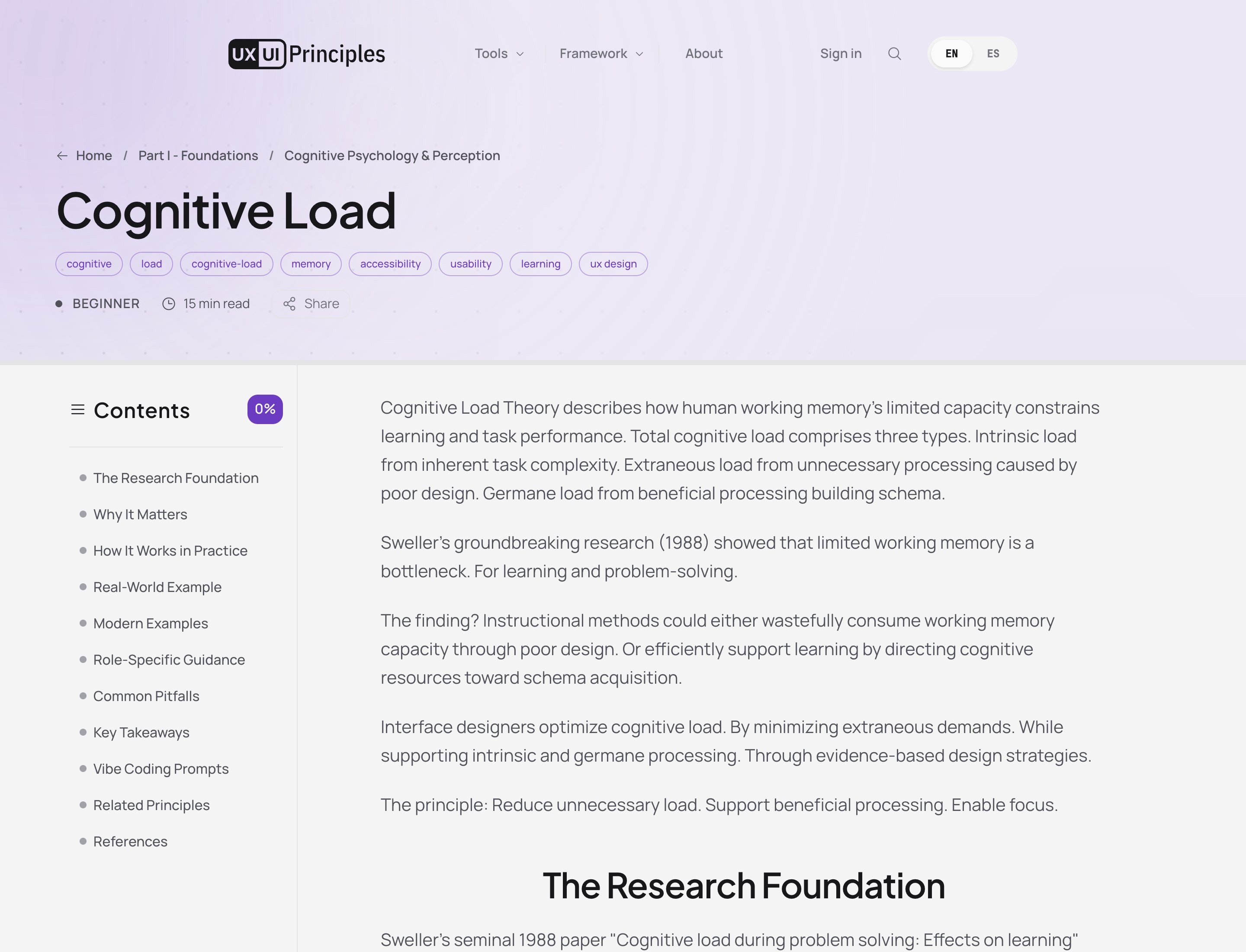
The obvious build was a website. The decision was a structured content platform: every principle authored against a fixed schema (name, citation-ready summary, explanation, source research, boundaries, related principles) and compiled to structured data.
That cost more upfront than hand-built pages. It is what lets one body of content serve several surfaces: the same principles feed the web product, the developer API and the MCP server, without content rework. It also makes retrieval work: a designer mid-meeting finds a principle by name, category, or keyword in under 30 seconds, because all 195 entries answer to the same structure.
3. Complete at launch, not an MVP
Lean orthodoxy said ship 40 principles and validate. The counterargument: nobody trusts an incomplete reference. A dictionary with a quarter of the alphabet is not a smaller dictionary, it is not a dictionary. Credibility, the only asset this product has, required the full body of work on day one.
The launch shipped all 168 principles then in the library, fully cited, in English and Spanish simultaneously; the library has since grown in public to 195. Months of editorial production before a single user validated anything. That was the bet: validate a complete product, then iterate on evidence rather than guesses.
Outcome
Within ten months of a solo launch, with zero paid acquisition, the reference became a paid product with customers in 10 countries. From December 2025 to October 2026 it earned 256,000 Google search impressions from 219 countries and territories (Search Console). Organic clicks grew from 17 a month in December 2025 to 278 a month in September 2026, up every month since February.
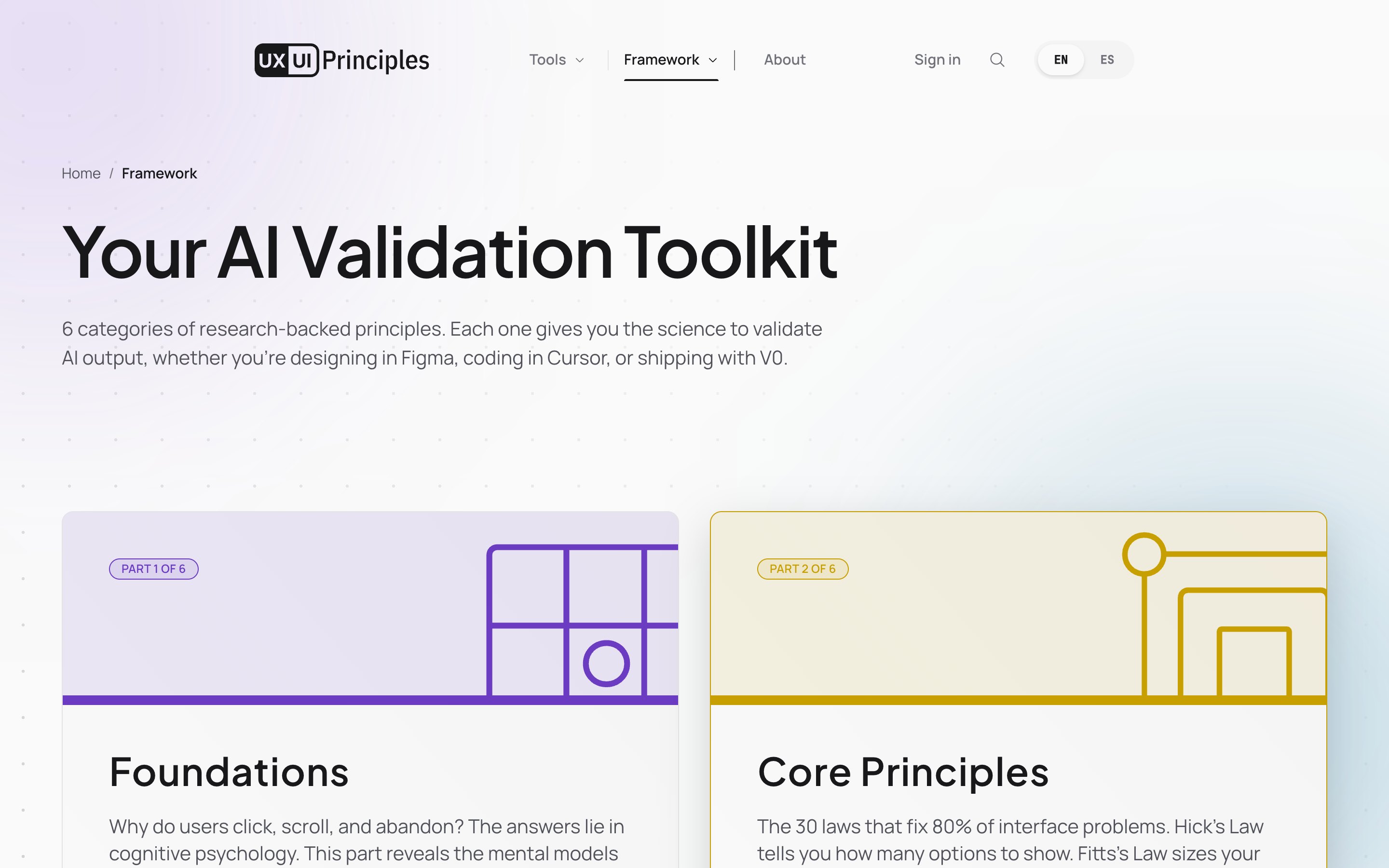
- 195 principles in English and Spanish (390 pages), 2,300+ academic citations
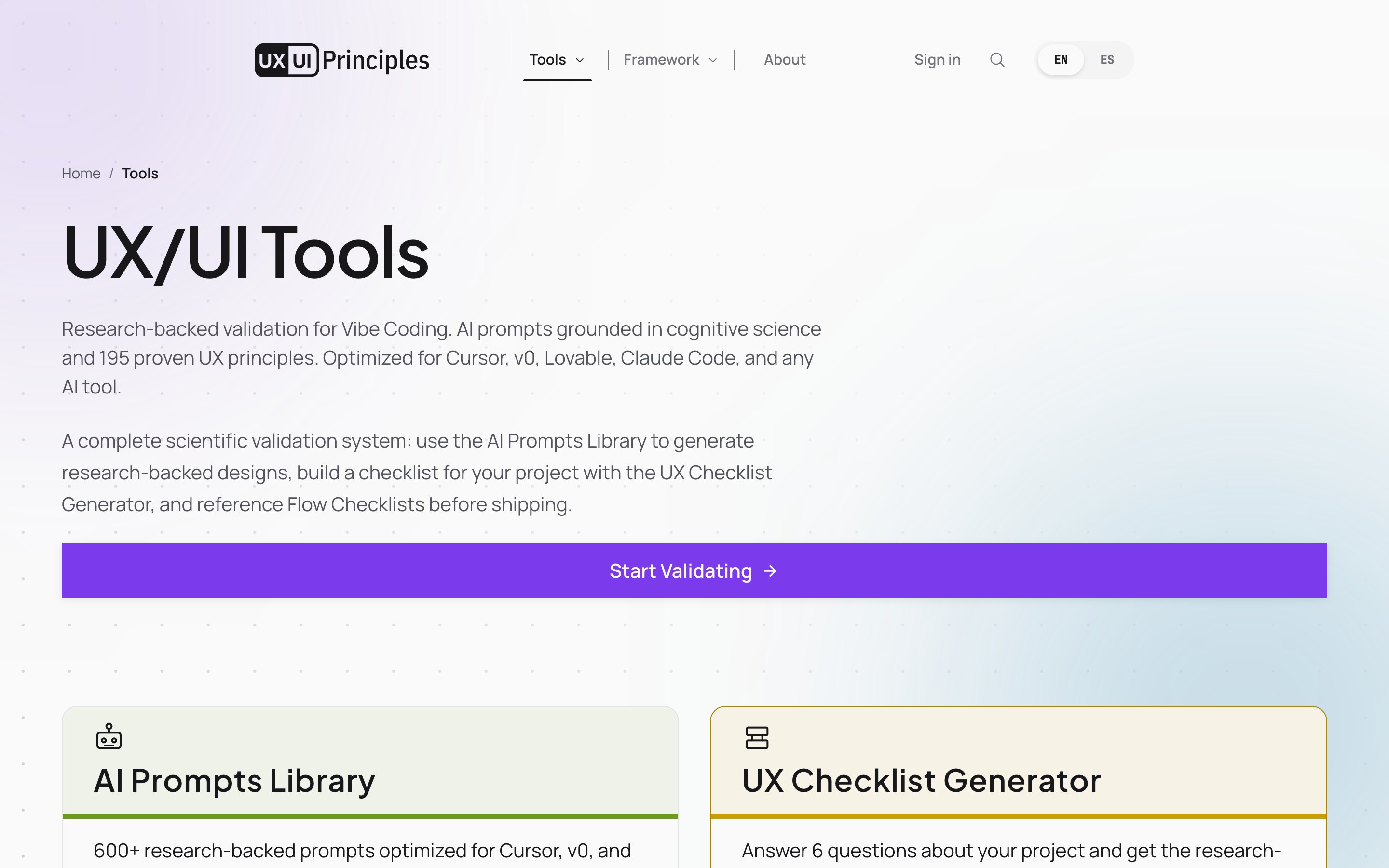
- Five live tools on a freemium model; the AI Design Validator stays free
- Developer API with 10 public endpoints and an MCP server with 14 tools, on the same content system; the MCP server package has 2,500+ npm downloads as of November 2026
- 661 AI prompts and IDE context packs
- 920 visits referred by AI assistants (ChatGPT, Perplexity, Copilot, Claude), measured by GA4 session source as of October 2026
- 10 principles dedicated to accessibility (WCAG POUR plus inclusive practice), and 35 tagged accessibility or inclusion
Reflection
The same bet again: launch complete or not at all, because an incomplete reference cannot be validated, only excused. The evidence for what to build next now comes from users instead of instinct.